Many healthcare professionals begin their aesthetic education through foundational lectures, anatomy training, and hands-on courses. These programs are essential; they provide the baseline knowledge of facial anatomy, injection techniques, and the basics of patient consultation. However, as injectors gain experience, they often realize that some of the most valuable learning occurs outside of a formal classroom.
Advanced clinical observation is the bridge between knowing the theory and mastering the craft. Observing experienced injectors treating real patients provides a level of insight that simply cannot be replicated through slides or textbooks. Watching how an expert evaluates a dynamic face, develops a multi-layered treatment plan, and adapts to each patient’s unique anatomy allows injectors to deepen their understanding of aesthetic medicine in ways traditional study cannot.
The Difference Between Learning Techniques and Understanding Decisions
Early in training, the primary focus is often on technique: where to place the product, how to hold the syringe, and how to approach specific zones safely. While these are vital, experienced injectors spend far more time thinking about the why rather than the how.
Through advanced clinical observation, providers can witness the internal decision-making process that happens long before the first needle enters the skin. This includes:
- Identifying underlying structural deficiencies vs. surface-level wrinkles.
- Determining which tissue layer requires support to achieve a natural lift.
- Evaluating how product placement in one area (like the midface) will affect the appearance of another (like the nasolabial folds).
Understanding these high-level decisions helps injectors develop the clinical judgment necessary to transition from a “line-filler” to a full-face rejuvenation expert.
Seeing Facial Assessment in Action
Facial assessment is perhaps the most difficult skill to master in aesthetic medicine. It requires an eye that can evaluate the face from multiple angles—profile, oblique, and frontal—while considering how movement and aging influence the patient’s appearance.
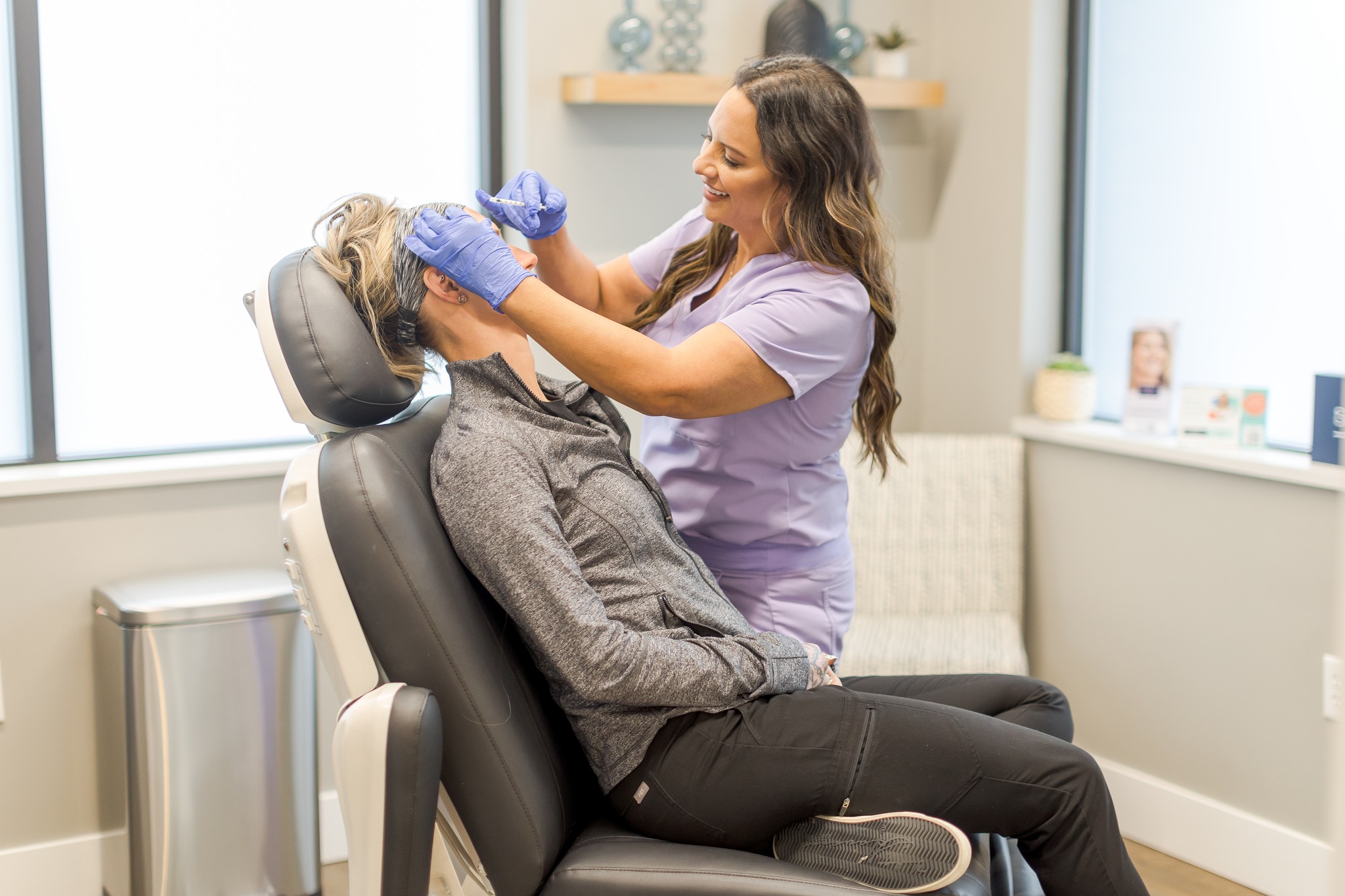
When injectors participate in advanced clinical observation, they see this evaluation unfold in real time. They aren’t just looking at a static “before” photo; they are watching a master clinician interact with a living patient. During these sessions, you might see how a provider:
- Evaluates Facial Symmetry: Identifying subtle imbalances that could be exacerbated by filler.
- Assesses Midface Support: Determining if the malar fat pads require volume to support the lower face.
- Examines Jawline Structure: Deciding between sharpening the angle of the mandible or softening the jowls.
- Considers Chin Projection: Understanding how the chin influences the perceived size of the nose and the tightness of the neck.
Learning Subtle Techniques and Nuances
Many aspects of aesthetic medicine involve “soft skills” and subtle physical adjustments that lectures often miss. Advanced clinical observation allows providers to see the “art of the consultation.”
You can observe how an expert manages patient expectations, explains complex procedures in simple terms, and handles the psychological aspect of aesthetic changes. Furthermore, the physical nuances—such as the exact pressure used on a plunger, the speed of an injection, and the specific depth of a cannula—become clear when seen in person. These nuances are what separate an average result from a world-class outcome.
The Value of Small Group Observation
Not all observation is created equal. To truly benefit from advanced clinical observation, the setting must be intimate. Small groups allow for a dialogue between the observer and the instructor. It creates a space where an injector can ask, “Why did you choose a needle over a cannula for that specific deep bolus?” or “How did you decide that the patient needed lateral temple support before addressing the tear trough?”
These real-time discussions allow providers to see how treatment plans evolve. Sometimes, a plan changes the moment a patient smiles or turns their head, and being there to see that pivot is an education in itself.
Professional Growth Through Revive Aesthetics Academy
At Revive Aesthetics Academy, we believe that experience shapes how injectors think. After more than two decades in the field, I have seen firsthand that aesthetics is medicine, not a hobby. Our responsibility is to evaluate the face with a clinical eye and develop treatment plans that serve the patient’s long-term goals.
Our academy is led by Stefanie Gatica, DNP, a nationally recognized educator and one of only fourteen MD Codes Trainers in the United States. Having trained with the internationally respected plastic surgeon Dr. Mauricio de Maio, Stefanie brings the world-renowned MD Codes methodology to every session. This structured, systematic approach to injection is best learned through advanced clinical observation, where the logic of the “codes” can be seen applied to diverse patient profiles.
Elevating Your Practice with Masterclasses
For injectors committed to the highest level of practice, Revive Aesthetics Academy offers specific opportunities for advanced clinical observation through our masterclass series. These are designed for those who have moved past the basics and are ready for complex structural treatments.
Current observation opportunities include:
- Advanced MD Codes Facial Balancing: Learning the full-face systematic approach.
- Seven Point Shape Masterclass: Mastering the contours of the female face for a refined, lifted look.
- Advanced Facial Balancing for Men: Understanding the distinct anatomical goals of the male patient, focusing on jawline strength and brow positioning.
Advancing Clinical Confidence
Ultimately, the goal of any continuing education is to build confidence. Confidence doesn’t come from just reading about a procedure; it comes from seeing it performed successfully and understanding the clinical “safety rails” put in place by experts.
By prioritizing advanced clinical observation, you are investing in your ability to provide balanced, natural, and safe results for your patients. It is one of the most transformative steps you can take to move your aesthetic practice from functional to exceptional.