Facial rejuvenation training has evolved significantly over the past two decades. Early injectable treatments often focused on treating individual wrinkles or adding volume to isolated areas of the face. However, modern aesthetic practice has shifted toward a deeper understanding of facial structure and the underlying causes of facial aging.
Many of the visible changes patients notice are not simply the result of wrinkles or skin laxity. These changes are influenced by structural shifts that occur in bone, fat compartments, ligaments, and skin over time. This understanding has led to a growing emphasis on structural support as the foundation of modern aesthetic medicine. Providers who approach treatments from a structural perspective through advanced facial rejuvenation training are able to create results that appear more balanced, natural, and long lasting.
Understanding Structural Aging
Facial aging is a complex process that involves multiple anatomical layers. Over time, the facial skeleton undergoes subtle changes in shape and projection. Fat compartments may shift or lose volume, and ligaments that support the soft tissues of the face can become less supportive.
These changes affect the position of the skin and soft tissues, contributing to the appearance of sagging, hollowing, and deeper folds. Patients often focus on specific lines or areas that concern them. An experienced injector recognizes that many of these visible changes originate from deeper structural changes within the face. Addressing these underlying changes allows providers to restore balance rather than simply filling isolated lines, a core philosophy taught in high level facial rejuvenation training.
Moving Beyond Volume Based Treatments
In the early years of filler treatments, many approaches focused primarily on adding volume to areas where lines or folds appeared. While this approach can improve certain concerns, relying solely on volume can lead to results that appear heavy or unnatural when the structural causes of aging are not considered.
Modern aesthetic philosophy places greater emphasis on restoring structural support in key areas of the face. Supporting the midface, temples, and other structural zones can influence the appearance of multiple areas at once. This approach often produces results that look more lifted and refreshed without excessive product placement. Comprehensive facial rejuvenation training helps providers treat the face as a connected system rather than a series of isolated treatment areas.
Facial Architecture and Balance
Every face has a unique architecture created by the relationship between bone structure, fat compartments, and soft tissue support. Structural approaches to facial rejuvenation evaluate these relationships before treatment begins. Providers assess factors such as:
- Midface support and cheek projection
- Jawline definition and lower face balance
- Temple volume and upper facial contour
- Overall facial harmony and proportion
Understanding these relationships allows injectors to develop treatment plans that support natural facial balance. Patients often report that they look more rested or refreshed when structural support is restored.
The Role of MD Codes in Structural Aesthetics
One of the most influential frameworks for structural facial rejuvenation is the MD Codes™ methodology developed by internationally recognized plastic surgeon Dr. Mauricio de Maio. The MD Codes system identifies specific anatomical points that influence facial lifting, support, and contour.
Each code corresponds to a treatment objective such as structural support, facial lifting, or refinement of a particular region. This structured approach helps injectors evaluate the face systematically. In our facial rejuvenation training programs, we teach that developing treatment plans based on facial architecture is far more effective than chasing isolated concerns.
Education and Expertise in Structural Aesthetics
Learning structural injection techniques requires a strong foundation in facial anatomy and advanced clinical training. Revive Aesthetics Academy is led by Stefanie Gatica, DNP, a nationally recognized educator in aesthetic injectables. She is one of only fourteen MD Codes Trainers in the United States and continues to train with internationally respected plastic surgeon Dr. Mauricio de Maio.
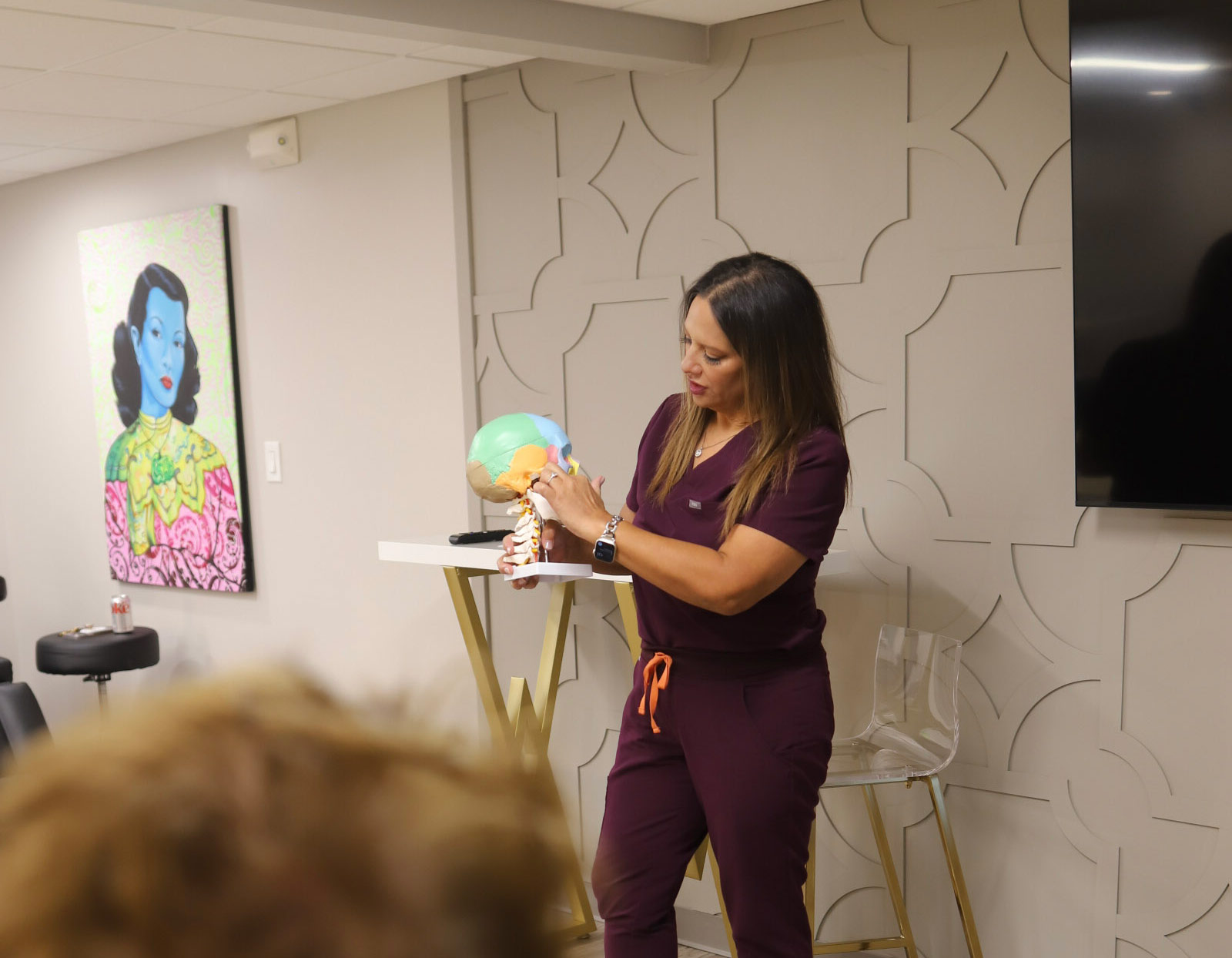
Through Revive Aesthetics Academy, Stefanie and her faculty provide structured facial rejuvenation training designed to help healthcare professionals develop responsible and advanced aesthetic practices. Training programs emphasize facial anatomy, patient safety, treatment planning, and structural approaches to facial rejuvenation.
Advancing Your Education in Structural Injection Techniques
Healthcare professionals who want to move beyond foundational injectable training often benefit from structured education in facial assessment and treatment planning. Courses within the Revive Aesthetics Academy curriculum introduce providers to structural treatment concepts through programs such as Introduction to MD Codes™ and advanced courses focused on facial support and lifting strategies.
These programs are designed for licensed medical professionals including:
- Registered Nurses (RN)
- Advanced Registered Nurse Practitioners (ARNP/NP)
- Physician Assistants (PA)
- Certified Registered Nurse Anesthetists (CRNA)
- Physicians (MD/DO)
Participants develop a deeper understanding of facial architecture and the principles that guide modern aesthetic treatments through our hands on facial rejuvenation training.
The Future of Aesthetic Medicine
Aesthetic medicine continues to evolve as providers gain greater insight into facial anatomy and structural aging. Injectors who adopt a structural approach are better positioned to deliver results that appear balanced, natural, and refined.
Continued education and thoughtful clinical practice remain essential for providers who want to grow in this field. For many healthcare professionals, the journey toward advanced aesthetic practice begins with developing a strong understanding of facial structure and the principles that guide modern facial rejuvenation. One principle I emphasize during facial rejuvenation training is that aesthetics is not a transaction. It is a transformation. Thoughtful treatment planning can restore balance and confidence without creating results that appear artificial.
Join Revive Aesthetics Academy
Are you ready to elevate your practice? Revive Aesthetics Academy provides the specialized facial rejuvenation training you need to master structural support and the MD Codes™ methodology. Join a community of medical professionals dedicated to clinical excellence and natural patient outcomes.