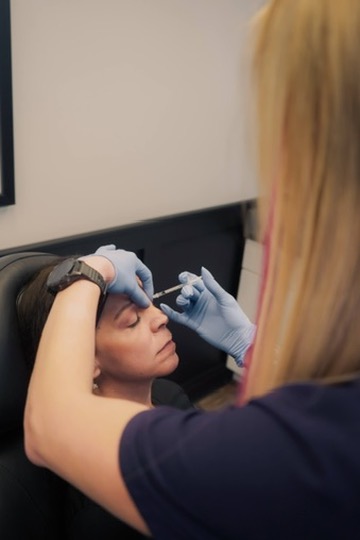
When medical professionals seek out aesthetic injectable training, the journey usually begins with a focus on the “how”—how to hold the syringe, how to select a product, and how to hit specific marks in the glabella or lips. While these technical skills are the bedrock of a safe practice, they represent only the first step in a much larger clinical journey.
There is a significant difference between the mechanical act of injecting and the clinical art of treating a face. Experienced providers understand that high level aesthetic injectable training is not simply about placing product into a specific location; it is about evaluating the face as a whole and understanding how interconnected structures influence a patient’s appearance.
Moving Beyond Individual Treatment Areas
New injectors often focus on treating isolated concerns. A patient may request treatment for a single wrinkle, a deep fold, or a specific loss of volume. However, treating only the visible concern does not always address the underlying structural changes that contribute to facial aging.
For example, a patient may request treatment of nasolabial folds. In many cases, the appearance of these folds is influenced by structural changes and volume loss in the midface rather than the fold itself. Comprehensive aesthetic injectable training teaches providers to look “upstream” to find the cause. When providers understand facial structure and aging patterns, they can identify the areas that will have the greatest impact on overall facial balance, leading to more natural and harmonious outcomes.
The Importance of Facial Harmony
The human face functions as a connected system of structures that work together to create facial expression and contour. Successful aesthetic treatment considers how each area of the face contributes to overall balance.
Injectors who treat only individual lines or features may unintentionally disrupt this balance, creating an “overfilled” or unnatural look. Conversely, providers who evaluate the entire face are better able to create results that appear refreshed and proportionate. This philosophy requires a shift in thinking: instead of asking where to place product, experienced injectors begin by asking why a particular concern exists and how the facial structure contributes to that concern.
Why the Best Injectors Diagnose and Plan
Healthcare professionals already possess many of the skills needed to succeed in aesthetic injectable training. Clinical training teaches providers to assess symptoms, identify underlying causes, and develop thoughtful treatment plans. The same principles apply to cosmetic procedures.
Experienced injectors approach aesthetic medicine as a diagnostic process. They evaluate facial anatomy, muscle activity, structural support, and patient goals before recommending treatment. This mindset allows providers to create individualized treatment plans that address the patient’s concerns while maintaining natural facial expression.
The Role of Structured Treatment Planning
As injectors advance in their aesthetic injectable training, they often begin learning systematic approaches to facial assessment. One of the most widely recognized frameworks for structural facial rejuvenation is the MD Codes™ methodology, developed by world renowned plastic surgeon Dr. Mauricio de Maio.
This approach helps injectors evaluate the face in a structured way and identify key anatomical points that influence facial support, contour, and balance. Understanding these concepts helps providers move beyond isolated injections and begin treating the face as an integrated system, which is the hallmark of an elite injector.
Building a Strong Educational Foundation
Healthcare professionals interested in the industry benefit most from aesthetic injectable training programs that introduce both technical skills and the principles of holistic facial assessment.
At Revive Aesthetics Academy, foundational courses such as Neurotoxins for Beginners and Cosmetic Filler Injections for Beginners provide early education in injection technique, consultation strategies, and facial anatomy. These courses are designed specifically for licensed medical professionals including:
- Registered Nurses (RN)
- Advanced Registered Nurse Practitioners (ARNP/NP)
- Physician Assistants (PA)
- Certified Registered Nurse Anesthetists (CRNA)
- Physicians (MD/DO)
- Participants gain hands on experience while learning the clinical principles that guide aesthetic treatments. As providers continue their education, advanced courses such as Introduction to MD Codes™ introduce structured approaches to facial assessment and treatment planning.
Developing Expertise in Aesthetic Medicine
Aesthetic medicine is both a science and an art. Technical injection skills are important, yet the ability to evaluate and treat the face as a whole ultimately determines the quality of patient outcomes.
Patients often arrive asking for treatment of one specific line. I remind our students during their aesthetic injectable training that we treat the patient—the patient does not tell us what to treat. Our role as medical professionals is to evaluate the entire face and develop a treatment plan that serves the patient’s overall goals safely and effectively.
Providers who invest in continued education and structured training pathways develop a deeper understanding of facial harmony, anatomy, and treatment planning. For many healthcare professionals, the journey begins with foundational training and continues through advanced clinical observation and mentorship that supports long term growth in the field.