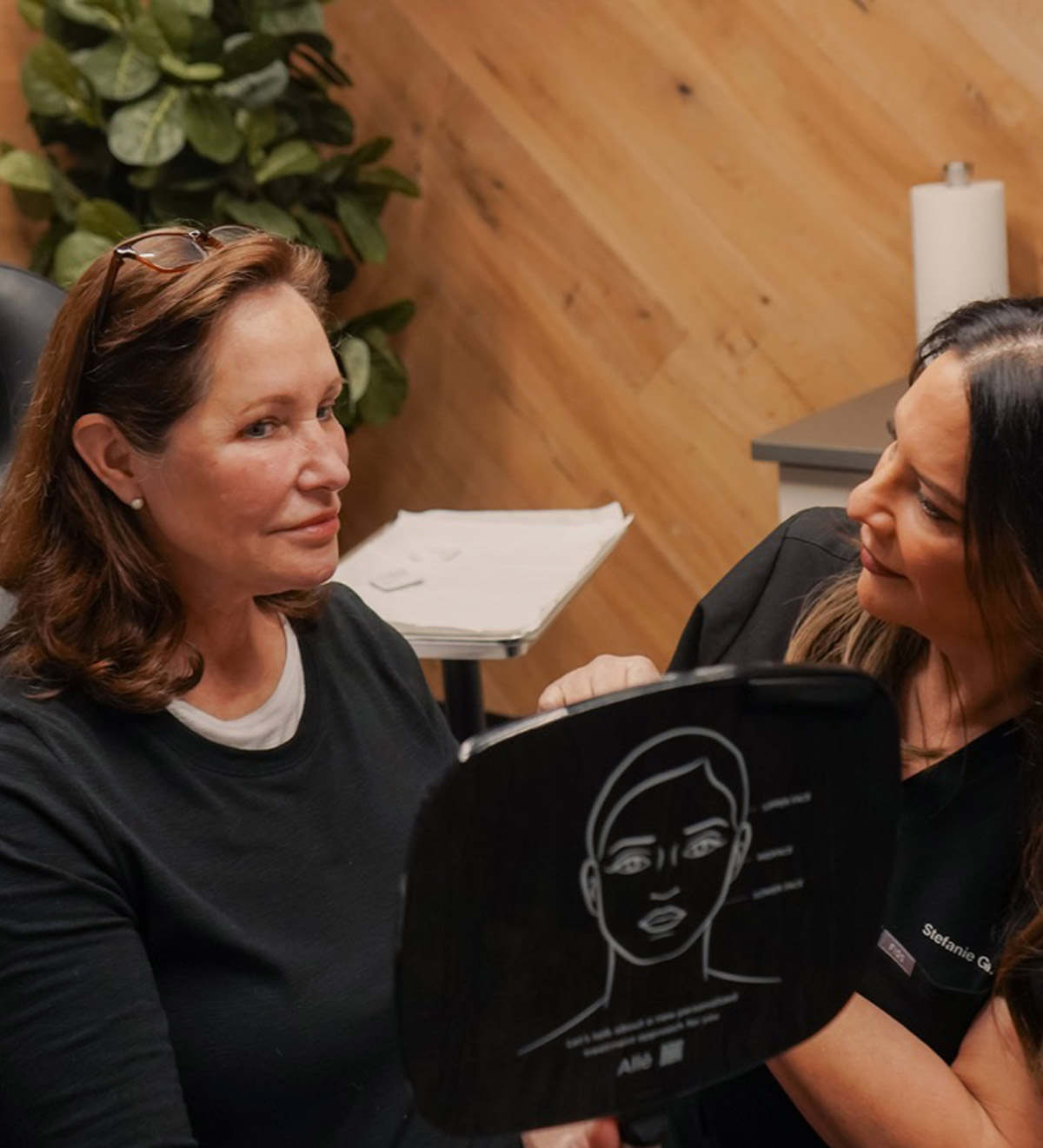
Memorizing facial anatomy is essential for any aesthetic provider. Knowing how to safely apply that knowledge to the unique face in front of you is what takes your practice to the next level.
Every responsible injector needs a strong foundation in facial anatomy. You need to understand vascular pathways, tissue planes, deep and superficial fat compartments, facial muscles, retaining ligaments, and the anatomical relationships that govern both treatment safety and visual results.
However, as providers gain real-world experience, a critical distinction becomes clear: knowing anatomy and knowing how to use anatomy clinically are two different skills.
One is knowledge. The other is judgment.
Why Textbooks Are Only Step One
Textbooks present human structures in ideal, standardized diagrams. Patients, however, rarely arrive looking like textbook illustrations.
In a live clinical setting, key variables constantly alter what you see and feel:
- Facial Proportions: Skeletal structure and asymmetry vary widely between individuals.
- Tissue Thickness: Skin quality and subcutaneous tissue density alter depth perception and tactile feedback.
- Aging & Anatomy: Volume loss, tissue laxity, and structural bone resorption shift normal anatomical landmarks.
- Patient History: Prior surgical procedures, weight fluctuations, genetics, and previous dermal filler or neurotoxin treatments change the underlying tissue landscape.
Because of these variables, an injector cannot simply memorize where a vessel or plane is supposed to be and assume every face will behave predictably. Anatomy provides the initial roadmap, but clinical judgment teaches you how to navigate an individual patient’s unique topography safely.
Learning to Read the Live Face
Advanced patient assessment requires far more than identifying named structures. It requires understanding dynamic facial interactions.
Experienced injectors evaluate how underlying support structures have changed over time, how muscle movement impacts aesthetic balance, and how treating one area can directly influence a secondary concern elsewhere on the face.
Instead of asking, “What anatomy is present here?”
The advanced provider asks, “What does this specific anatomy mean for this exact treatment, on this patient, today?”
That mindset shift is the hallmark of an expert injector.
Assessment Tools: Observation, Movement, and Palpation
A patient’s face offers vital diagnostic information long before a needle or cannula touches the skin. Master injectors rely on three primary assessment methods:
- Static Assessment: What structural patterns and vascular risks are visible at rest?
- Dynamic Assessment: How do tissue planes, muscle pull, and facial dynamics shift during animation?
- Tactile Assessment (Palpation): What can be appreciated through touch? How thick are the tissue layers, and where are natural bony landmarks located?
Combining these observations helps translate static anatomical memorization into active clinical decision-making. This is precisely why hands-on aesthetic training and live-patient clinical assessment are irreplaceable. Providers need repeated opportunities to analyze anatomical concepts across diverse facial types under expert guidance.
Knowing When Anatomy Changes the Treatment Plan
Sometimes an anatomical assessment confirms your initial treatment plan. Other times, it signals that you need to pause and adapt.
An anatomical finding might reveal:
- A higher-risk vascular trajectory that demands a change in product choice or injection depth.
- An altered tissue plane that requires switching from a needle to a blunt-tip cannula.
- Structural conditions where the safest, most effective choice is a completely different aesthetic modality, or declining treatment altogether.
Adapting your plan based on patient anatomy is not a sign of hesitation; it is the mark of high-level clinical maturity and patient-first safety.
Connecting Safety Anatomy to Aesthetic Outcomes
Injectors often separate education into two distinct categories: safety anatomy and aesthetic anatomy. In clinical practice, they are intrinsically linked.
The precise anatomical understanding that helps you prevent vascular complications is the exact same knowledge that helps you craft natural, refined aesthetic outcomes. Knowing precisely where and at what depth to place product directly dictates:
- Structural projection and facial support
- Smooth tissue integration
- Natural dynamic movement during facial expressions
Better anatomical understanding directly yields better clinical decisions, leading directly to superior patient results.
Bridging the Gap in Aesthetic Education
If you have completed foundational anatomy courses but still feel hesitant when assessing complex, real-world patients, you are not alone.
You don’t need another generic diagram. You need practical opportunities to connect textbook knowledge to real treatment plans, live patient variability, and the decision-making processes of seasoned master injectors.
At Revive Aesthetics Academy, we believe facial anatomy shouldn’t just be memorized. It must be actively applied. Through advanced observation, comprehensive case discussions, and hands-on clinical mentorship, we help medical professionals develop the sharp clinical judgment required to inject with complete confidence.
Ready to elevate your clinical skills and master advanced facial assessment? Explore our advanced mentorship programs and clinical foundations courses at Revive Aesthetics Academy today.